Featured · From the Curatorial Desk
The face that never was.
For forty-four years, the founder of the Cape stared back from every banknote South Africans handled. Except he didn't. The portrait was someone else entirely — and the discovery, when it came, came from an unlikely place.
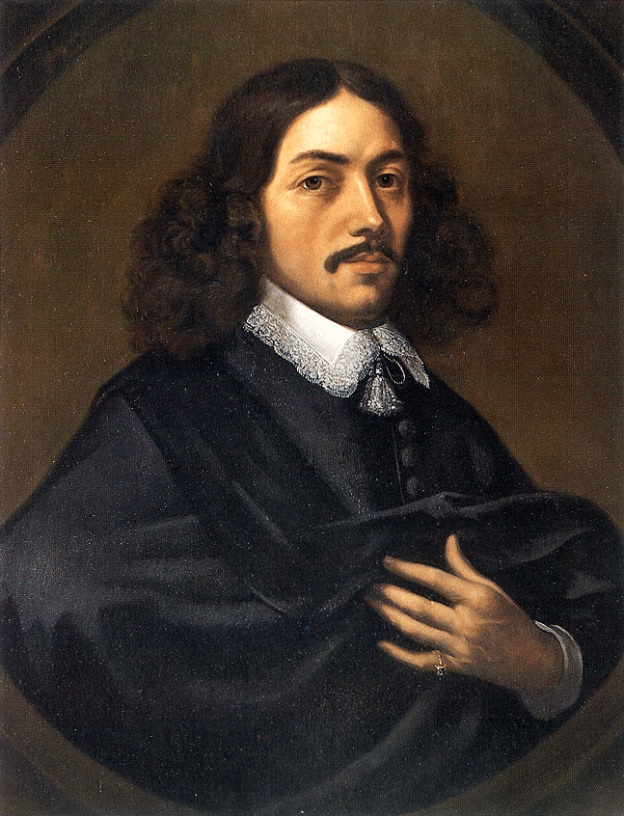
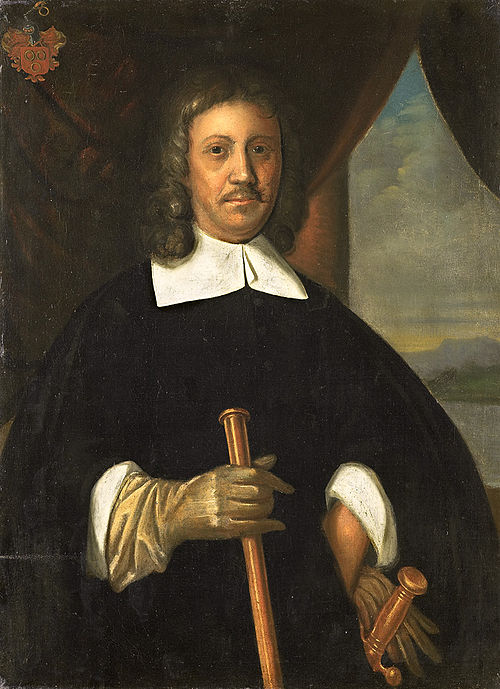
Two Dutchmen of the seventeenth century. Only one founded the Cape. The wrong one became the face of South African currency.
For most of the second half of the twentieth century, every adult South African could draw the founder of their country from memory. Chiselled jawline. Long, parted hair. Neat moustache. The face appeared on the one-rand note. The two-rand. The ten. The twenty. It looked back from coins until 1970, from postage stamps for decades, and from the cover of every school history book published between Pretoria and Plettenberg Bay. It was the face of Jan van Riebeeck — the Dutch East India Company merchant who, on the morning of 6 April 1652, anchored three small ships in Table Bay and stepped ashore to build a way station for the Indies trade.
The face was wrong. The man it depicted had died two years before Van Riebeeck ever set foot in Africa. He had never seen the Cape. He had never crossed the equator. And he was not even a sailor — he was a soldier, in the army of the Dutch Republic, who lived and died in the Low Countries without leaving any record more remarkable than a quiet domestic life and a single oil portrait of himself and his wife.
The story of how his face came to be the face of a country, and how the truth was finally uncovered, is one of the more remarkable accidents in modern numismatics.
How the wrong face was chosen
The portrait first appeared on a South African banknote in 1948. The South African Reserve Bank, founded in 1921, had been issuing pound-denominated notes since 1922 — early issues bore a watermark of a man identified as Van Riebeeck, but no full portrait. The 1948 redesign placed his image squarely on the obverse for the first time. When decimalisation came in 1961 and the rand replaced the pound, the same portrait was carried over almost unchanged. It would remain on every major SARB issue for the next thirty-one years, through the second series (1966), the third (1978), and into the early 1990s.
The image the SARB used had been sourced from the Rijksmuseum in Amsterdam, where it had been catalogued for more than half a century as a portrait of Jan van Riebeeck. The painting had been donated to the museum in June 1884 by Jonkheer J.H.F.K. van Swinderen of Groningen, along with two dozen other family pictures. He had inherited it from a distant cousin who had inherited it before him. It came labelled, in a family tradition stretching back to the early nineteenth century, as a portrait of Van Riebeeck and his wife Maria de la Queillerie.
That label, on a painting handled and recorded by professional curators in the largest museum in the Netherlands, was treated as decisive. When South African designers needed a Van Riebeeck face for the new republic's currency, they went to the obvious source — a major museum's identified portrait — and put it on the notes. The label was wrong, but the label had been wrong for nearly three centuries, and no-one had reason to question it.
The genealogist who broke the case
The man who unravelled the error was Jonkheer F.G.L.O. van Kretschmar, a Dutch genealogist working at the Centraal Bureau voor Genealogie in The Hague. He was not a numismatist. He was not researching banknotes. He was researching the family that had donated the painting to the Rijksmuseum — the descendants of the Van Lynden and Van Swinderen lines — and what he found, while tracing the picture's provenance through their wills and inventories, was that nothing in the family records actually connected the portrait to Van Riebeeck at all.
Van Kretschmar published his findings in 1984, in a long, careful paper titled "To be or not to be: The Van Riebeeck portraits in the Rijksmuseum" in the Yearbook of the Central Genealogical Bureau, volume 38. The argument was meticulous. The painting had descended through the Van Lynden family for generations. Genealogy showed they had no connection whatever to Van Riebeeck. They did, however, connect — through marriage, by way of an aunt — to a man named Bartholomeus Vermuyden, born in 1616 or 1617, who married Catharina Kettingh in 1646, and who died young in 1650.
Van Kretschmar's case rested on three things. First, the family provenance pointed to Vermuyden, not Van Riebeeck. Second, the date of the painting — attributed to the Hague painter Dirck Craey and dated to around 1650 — fitted Vermuyden's life exactly. Third, the man in the picture looked nothing like a separate portrait of Van Riebeeck made in the East Indies around 1660, which the Rijksmuseum also held. Side by side, the two faces were obviously different men.
The Rijksmuseum accepted the conclusion. Today, the painting (accession SK-A-808) is catalogued formally as "Portrait of a Man, thought to be Bartholomeus Vermuyden". Its pendant — the portrait long believed to be Maria de la Queillerie, Van Riebeeck's wife — is now catalogued as "Portrait of a Woman, thought to be Catharina Kettingh". Two faces. Two new identities. A double misattribution that had stood since 1884.
What South Africa did next
Van Kretschmar's 1984 paper made the South African press the following year, and again at intervals through the late eighties. By then, the political winds had already shifted. The 1948–1992 series of banknotes — apartheid-era currency built around colonial iconography — was due for replacement on its own merits. In 1992, the SARB issued the new Mamelodi series. The Big Five animals replaced Van Riebeeck on the obverse. The portrait was retired without ceremony.
The SARB has never formally commented on the Vermuyden discovery. The replacement was framed as a political and aesthetic update, not a correction. But the timing — eight years after Van Kretschmar's paper, in the final months of apartheid — meant that a face that had carried South African currency for forty-four years left the notes quietly, with the embarrassment unspoken.
The face had appeared on coins until 1970, when the coat of arms replaced it on circulating coinage. On the notes it lasted twenty-two years longer. On postage stamps, in school textbooks, in the bronze of statues, and in the family memory of two generations of South Africans, the face of Bartholomeus Vermuyden — soldier of the Dutch Republic, who never crossed the equator — had become the face of the founder of Cape Town.
The timeline, in brief
For the collector
Three of the SARB's banknote series carry the Vermuyden portrait. Each is collected actively today — for both the historical interest of the design and the irony of what the design actually depicts. For collectors entering the field, these are the issues to know.
- Pre-decimal pound issues (1948 – 1960). The portrait first appears in the 1948 redesign by H.L.G. Pilkington, on the £1, £5, £10, and £20 denominations. Notes signed by Governors M.H. de Kock and others. The earlier issues are scarce in higher grades.
- First decimal series (1961 – 1965). The transitional rand notes — R1, R2, R10, R20 — issued in colours and designs deliberately matched to the outgoing pound series, signed by Governor T.W. de Jongh. Generally the most affordable Vermuyden notes today.
- Second and third Van Riebeeck series (1966 – 1992). The longest run. The portrait remains on the obverse through three governors (De Jongh, Stals, and others), with the third series (1978–1992) introducing the lion alongside the portrait — the first appearance of a Big Five animal on a South African note.
- What to look for. Originality of paper, sharpness of intaglio detail in the portrait itself, and uncirculated examples of the early pound notes. Van Riebeeck-watermark notes from 1922 onwards (which precede the full portrait) are an adjacent collecting field with different scarcity.
The strangest postscript
What survives the story is not the embarrassment but the scale of the misidentification. A single portrait, painted in a Hague studio around 1650 — almost certainly of a soldier who lived a quiet life and died young — was donated to a museum in 1884, mis-catalogued in good faith, and from that mis-catalogue made its way onto the currency of an entire country, where it remained the face of the founding figure of South African colonial history for nearly half a century.
If Bartholomeus Vermuyden ever knew his face was being printed millions of times a year on the banknotes of a country he had never visited, he gave no sign. He died in 1650, two years before the founding event he was credited with. The portrait that bore his face is now correctly catalogued in Amsterdam. The notes that carried it are still legal tender in South Africa. They will buy nothing at any shop, but they will buy, for a careful collector, a piece of one of the most peculiar errors in numismatic history.