
Jardines Galleries · The rand era · 1961 – present · 65 years · Three series
Decimal Coinage.
On 14 February 1961, South Africa retired the pound sterling system and adopted the rand at £1 = R2 — the moment documented in detail on the 1961 Decimal Transition page. What followed is 65 years and three series of decimal coinage: the founding First Series (1961 – 1964) with Jan van Riebeeck on the obverse and the lingering tickey; the workhorse Second Series (1965 – 1989) spanning 24 years and the bilingual era; and the modern Third Series (1989 – present) with smaller, lighter coins, modern alloys, and the bi-metal R5. This page is the workflow reference — atlas-centric, three-series organised, built for fast denomination confirmation.
The founding rand-era series. Jan van Riebeeck on the obverse, denominations from ½c to 50c, and the only Decimal series to include the lingering tickey — the 2½c carried over from pre-decimal threepence.
The longest series at 24 years. The 2c replaces the 2½c in 1965, ending the tickey lineage. The 1965 – 1969 bilingual era sits inside this series — annual alternations between English and Afrikaans legends.
The practical set most South Africans encounter today. Smaller, lighter coins, modern alloys, and the bi-metal R5 as the workhorse of the modern era. The longest-running series of the three, and still active.
First Series · 1961 – 1964
The founding · Van Riebeeck obverse · Includes ½c and tickeyThe founding series
The obverse carries Jan van Riebeeck — the Dutch commander who established the Cape settlement in 1652. The First Series ran for only four years before being replaced, but it carries two unique structural features: the inclusion of the ½c (the smallest decimal denomination ever issued) and the 2½c (the only direct carryover from pre-decimal threepence — the tickey).
Second Series · 1965 – 1989
The workhorse · 2c replaces 2½c · 24-year run · Bilingual era 1965 – 1969The workhorse series
The structural inflection: the 2c replaces the 2½c from 1965, ending the tickey's mathematical lineage to the threepence. The Second Series became the workhorse decimal coinage through the apartheid era and into the late 1980s. Bilingual variations — SUID-AFRIKA / SOUTH AFRICA alternating year-by-year on certain denominations — exist in the 1965 – 1969 window, before settling into a more standardised approach.
Third Series · 1989 – present
The modern · Smaller, lighter, modern alloys · Bi-metal R5 · Still activeThe modern series
The practical set most South Africans encounter today. Smaller, lighter coins; modernised alloys; and the bi-metal R5 — the workhorse high-value coin of the modern era. The Third Series has now run longer than the founding First and Second Series combined. It remains active, with ongoing minor design refreshes managed by the SA Mint at Pretoria.
Visual atlas
Obverse + reverse pairs · Click any image for full size · Decimal coins onlyRepresentative obverse/reverse pairs across all three series. The 1965 – 1969 cards capture the bilingual era; the standard cards represent denominations broadly across the post-1969 issues. For year-by-year mintages and bilingual variation detail, route into the Bilingual Varieties leaf page.
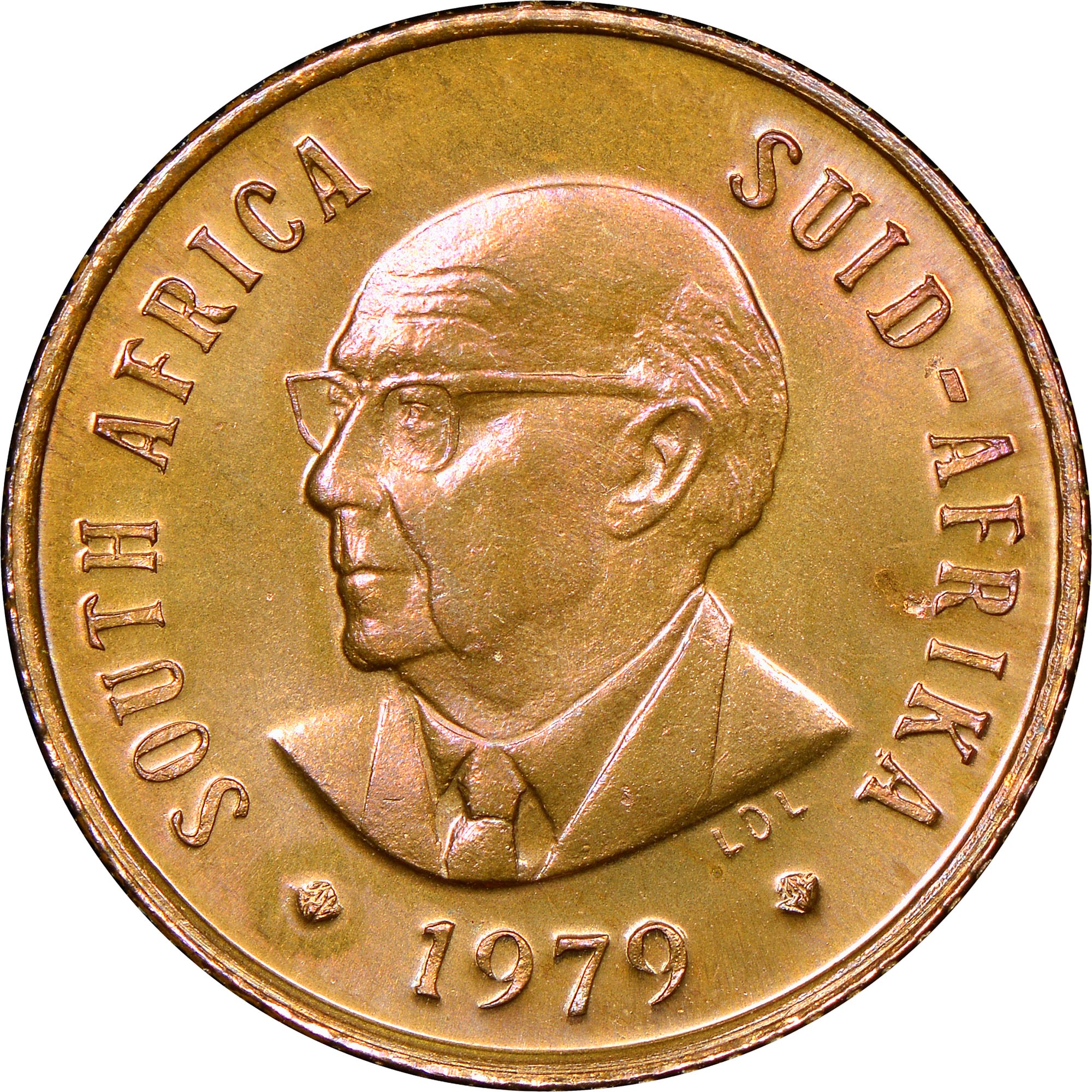 — Obverse —
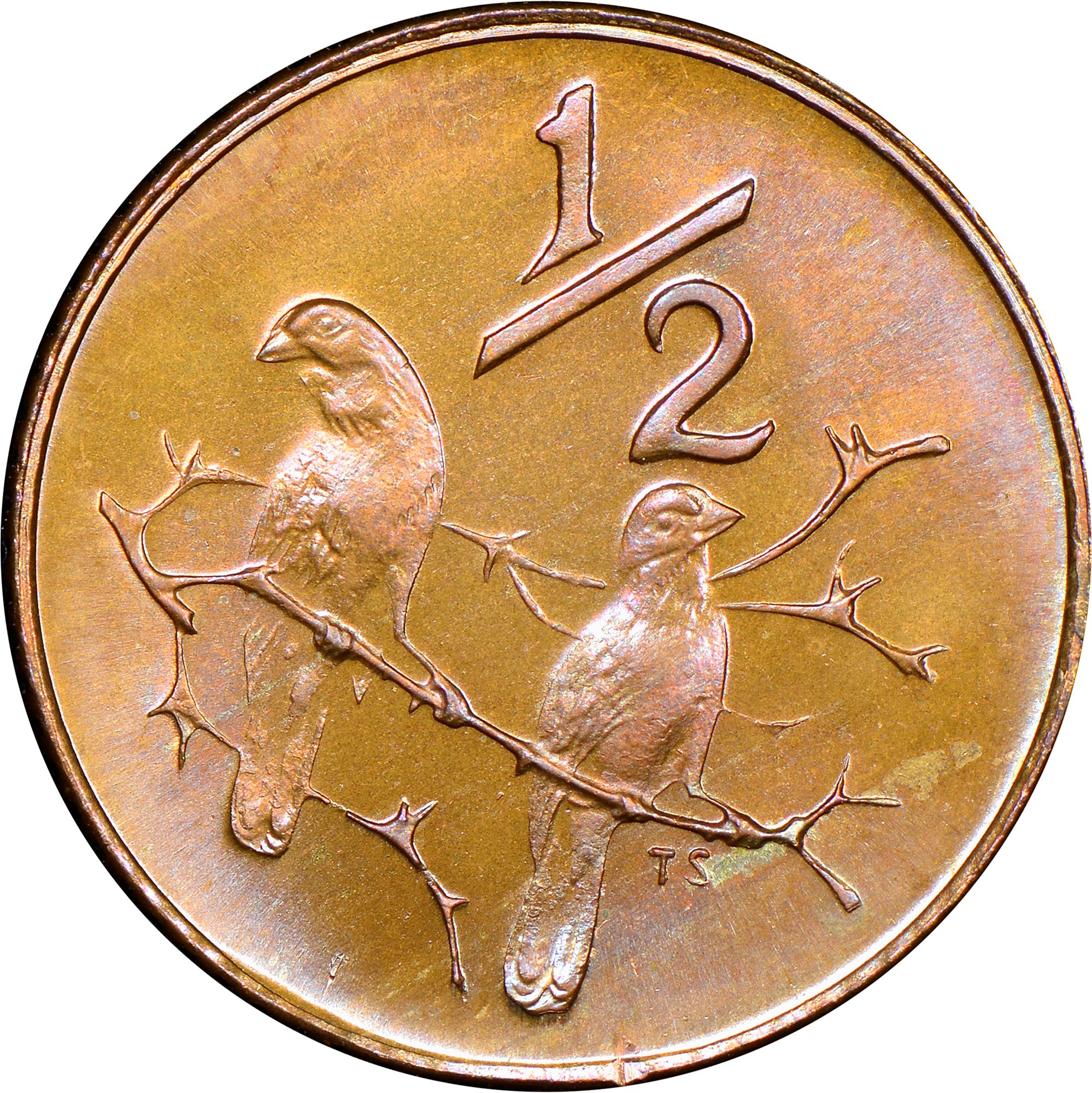 — Reverse —
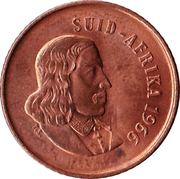 — Obverse —
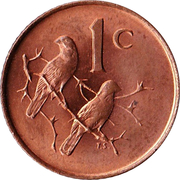 — Reverse —
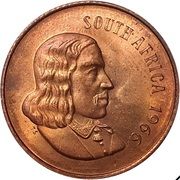 — Obverse —
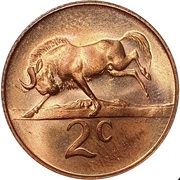 — Reverse —
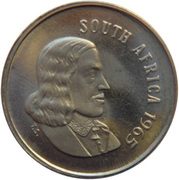 — Obverse —
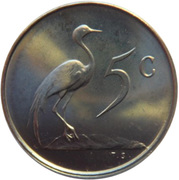 — Reverse —
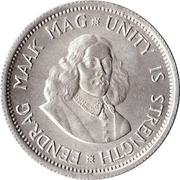 — Obverse —
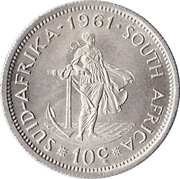 — Reverse —
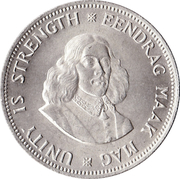 — Obverse —
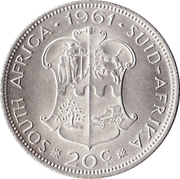 — Reverse —
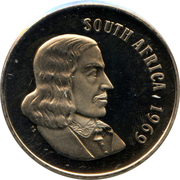 — Obverse —
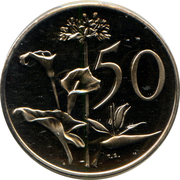 — Reverse —
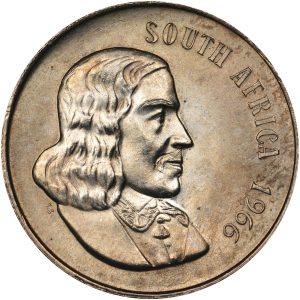 — Obverse —
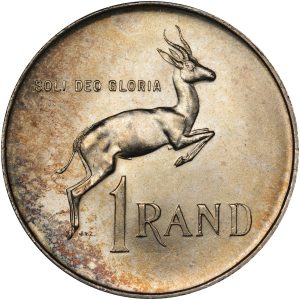 — Reverse —
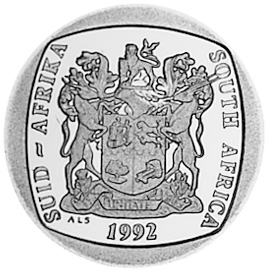 — Obverse —
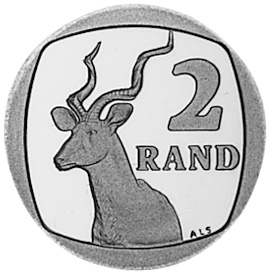 — Reverse —
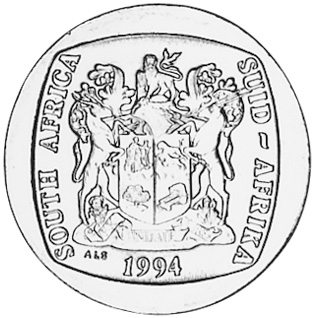 — Obverse —
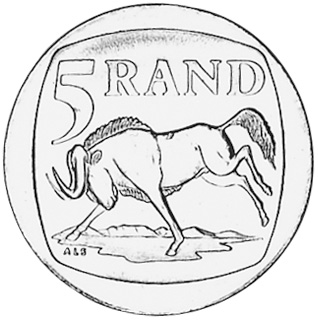 — Reverse —
Library cross-references
The transition · Bilingual era · Predecessor era · Operational source1961 Decimal Transition
The 14 February 1961 conversion itself — the rand replacing the pound, Decimal Day operations, the conversion math, and the political-economic context. The dedicated leaf page for the moment that opens this era.
— Read the transition story → — Second Series sub-page —Bilingual Varieties · 1965 – 1969
The five-year window when SA decimal coinage alternated annually between English and Afrikaans legends — SOUTH AFRICA one year, SUID-AFRIKA the next. Year-by-year identification reference.
— Open the sub-page → — Predecessor era —Union Hub · 1923 – 1960
The era before the rand. Union pound-shilling-pence coinage from 1923 to 1960, three monarchs, nine denominations. The visual atlas there pairs naturally with the one on this page — same reference register, different currency system.
— Open the predecessor → — Era context —The SA Pound Symbol
The £ symbol that died on 14 February 1961. Its evolution across the Union era and the typographic transition from £ to R is the contextual companion to this page's coinage transition.
— Open the context →Sources
Standard catalogues · Mint publications · Reserve Bank summaries- Hern, Brian. Standard Catalogue of South African Coins. The canonical reference for SA decimal mintages, varieties, and KM numbers.
- South African Mint publications. Annual reports and design correspondence from the SA Mint at Pretoria.
- SARB historical summaries. South African Reserve Bank historical material on the 1961 conversion and post-decimalisation monetary policy.