
The Library · Banknotes
South African Banknotes.
Two and a half centuries of paper money — from handwritten Dutch guilders in 1782, through colonial banks, the founding of Africa's oldest central bank, to the polymer notes of today.
From the curatorial desk
Featured Editorial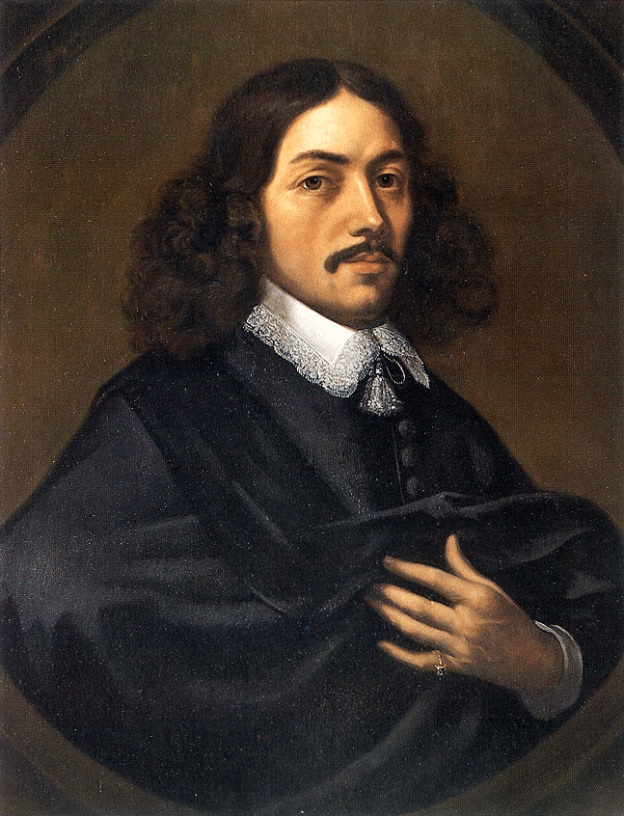
The series, in order
Six Eras of South African PaperThe Free-Banking Era
Handwritten VOC notes, colonial sterling, and the issues of more than thirty private banks before the SARB existed.
Enter the era 1921 – 1960sThe First SARB Issues
Africa's oldest central bank prints its first notes in 1922 under Governor W.H. Clegg, then Dr. Johannes Postmus.
Enter the era 1967 – 1992The Van Riebeeck Series
The longest-running South African series — and the one that carried a famous case of mistaken identity.
Enter the era 1992 – 2012The Mamelodi Series
The first Big Five notes — the elephant, rhino, lion, buffalo, and leopard that became globally iconic.
Enter the era 2012 – presentThe Mandela Series
Nelson Mandela on the obverse, the Big Five on the reverse — a defining series of the democratic era.
Enter the era 2023 – presentThe Polymer Notes
South Africa's first plastic banknotes — a generational shift in security, durability, and design.
Enter the eraA short history
From Guilder to RandDutch settlers brought the guilder to the Cape in the 1600s, but South Africa's paper money began in 1782 — handwritten notes issued only because coinage had grown scarce. They circulated briefly, then vanished. In 1806 Britain took the Cape, and sterling became the basis of the colony's currency.
From 1825 to 1921, the Cape and the interior ran on what bankers now call free banking. More than thirty private institutions issued their own notes — among them the Cape of Good Hope Bank, the Bank of South Africa, and in the Transvaal, the National Bank of the Zuid-Afrikaansche Republiek. None of these notes were the product of a central authority. Every one of them was a private promise to pay.
The South African Reserve Bank was established in 1921, the oldest central bank on the African continent. Its first banknotes followed on 19 April 1922. The pound remained the country's currency until 14 February 1961, the day of decimalisation. The rand replaced the pound at the rate of R2 = £1. Its name comes from Witwatersrand — the ridge of white waters where most of South Africa's gold has been found.
One administrative fact still surprises new collectors: no South African banknote issued since 1961 has ever been demonetised. Every note retains its face value. A 1965 Rissik R1 will still buy a loaf of bread, in principle, even if no shop will recognise it. The collector value is, naturally, another matter entirely.
Look · Feel · Tilt
SARB Authentication MethodL · O · O · K
Look
F · E · E · L
Feel
T · I · L · T
Tilt
Special cases
Emergency Issues & Withdrawn NotesCollector Advisory
The Pre-2005 R200 Withdrawal
In May 2010, the SARB withdrew the pre-2005 "Big Five" R200 notes from circulation following widespread high-quality counterfeiting. Commercial banks no longer accept them — but the SARB will still exchange them at face value.
Hours: Tuesdays & Thursdays, 09:00 – 13:00. Direct cash-for-cash only.
Emergency & Special Issues
The scarce chapters.
Beyond the major series, several extraordinary issues belong to the South African paper-money record — produced under siege, in war, or in colonial circumstances that never fully played out.
- Anglo-Boer War Siege Notes — Mafeking, Kimberley, Ladysmith
- Concentration Camp Notes — POW camp currency
- Griqualand-East £1 Note (1868) — the unissued currency
- Postal Orders & Fiscal Items — revenue stamps, bonds, scripophily